Career Guide · Updated August 2026
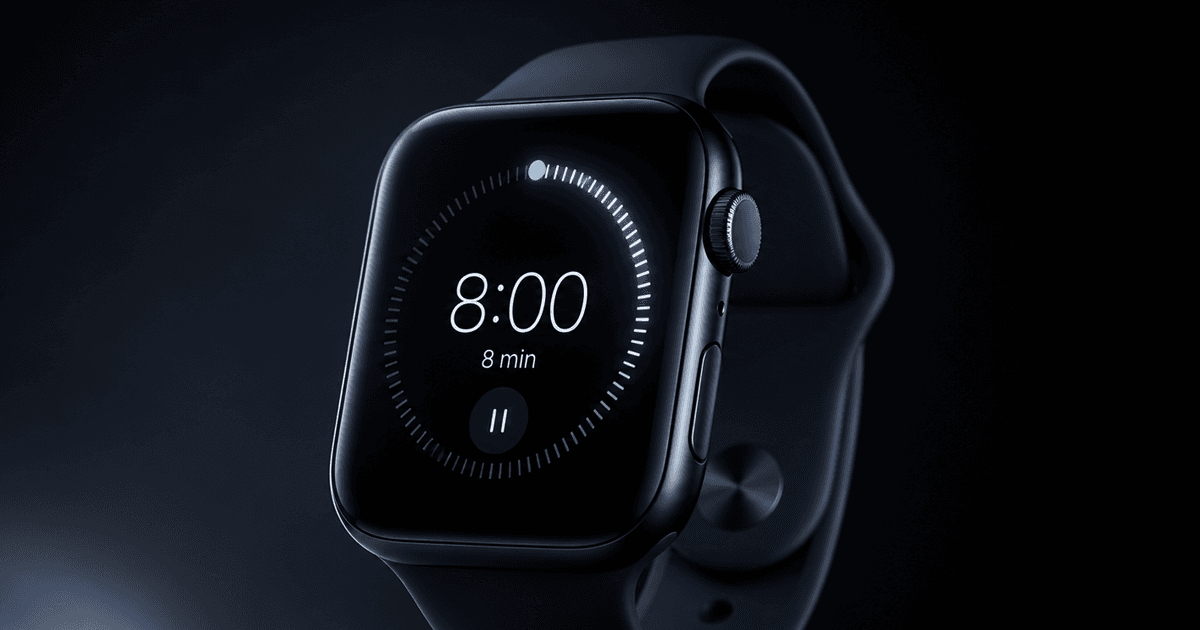
The eight-minute interview.
When they fly you out and can’t spare eight minutes, that’s the answer. The eleven red flags from a real flyout, how to read them in real time, and what to do once you’re back at the airport.
This guide is for the senior candidate sitting in a rideshare back to the airport, replaying the afternoon. The recruiter sold a consortium reporting to the CTO. The reality was a borrowed conference room, a CTO who had ten minutes, and a team that couldn’t debug its own assessment. If that’s the day you just had, this is the playbook for the next 48 hours and every interview after.
A note on the personas. The seven perspectives later in this guide (Steve Jobs, Jony Ive, Elon Musk, Sam Altman, Dario Amodei, Satya Nadella, Larry Ellison) are written by Claude voicing each one’s public methodology, not transcribed quotes from real conversations. The methodology is real. The voices are simulated.
Source field report: “The CTO Who Flew Me Out Couldn’t Spare Eight Minutes” on justinbartak.ai. The guide below is the playbook the field report should have shipped with.
Reading this mid-interview?
This is the test of composure, not the test of fit. You don’t have to enjoy the next two hours. You have to leave with the data. The rest of this guide is what to do with that data once you’re back at the airport.
The pattern.
A recruiter calls. Senior role. AI-native transformation. A consortium of four to five experts reporting to the CTO. A real seat at a real table. Tickets booked, hotel covered, ground transportation arranged. The whole performance of seriousness.
You land. You arrive fifteen minutes early. Nobody comes to get you. Five minutes pass before someone walks down. The technical exercise is real but the team can’t run it. Missing API keys. Broken Node. NPM out of sync. You sit and watch the engineers fail to install dependencies on their own machines.
You ask the team about their AI work. The answers are honest in a way the recruiter pitch wasn’t. How did you do that. We haven’t done that yet. We’re thinking about that. No agents in production. No self-healing architecture. No proprietary model work. You offer 368,000 lines of production code, a research paper on framework comparison, and a sample app already written in their stack (Angular) to verify the thesis. They decline all of it.
The CTO arrives near the end of the interview. Ten minutes before you are done. He has ten minutes. He spends most of them on where you are from and what brand your bag is. You give him a calm read on why an Angular front end will fight an AI-native build, and that if they are going AI-native they should consider Next.js. He scowls. Who do you think you are. Grab your stuff. You won’t be coming back to this office.
You leave a water bottle, a jacket, and a pair of glasses on the conference table. An engineer calls and says they put your things on the front counter. Don’t come back up. We’re done with you.
That is the pattern. Not the exception. The interview was the data. The eight minutes were the answer. Now the work is to read the signal, send one calm email, and never confuse this kind of afternoon with a personal failure.
Red flags before you land.
The signal starts before the wheels touch down. Three things to watch for in the week before a flyout:
- The agenda arrives late or vague.A serious onsite has a written agenda 48 hours out. Names. Roles. Time blocks. Topics. If the recruiter sends “we’ll figure it out when you get there,” the team you would join figures everything out when they get there. That is not a strength.
- The CEO or CTO never blocks calendar time.When the most senior person in the loop hasn’t confirmed a window, no one has actually committed. The slot is conditional on their day. Your day is not.
- The recruiter pitch and the job description don’t agree.Read the public posting. Compare it to the recruiter’s phrasing. If the recruiter says “reporting to the CEO” and the JD says “reporting to the VP of Engineering,” the leader role is already two titles deeper than promised. The pitch is marketing. The JD is the contract.
None of these by itself is disqualifying. Two of three is. Three of three is the whole story before the plane lifts off.
Red flags during the assessment.
Four signals to watch for once the technical session starts. Each is small. Together they are a portrait of how the team operates on a normal Tuesday.
- The team can’t run its own assessment.Missing keys, broken Node, NPM stuck. Watching the engineers fail to set up the test you came to take is a tour of how the team handles its own infrastructure. If they can’t install dependencies on the day they recruit you, they don’t install dependencies on Tuesday morning either.
- The exercise is real but the data is wrong.The bug only happens when the input file has more than eight columns. With the environment ready and a real input file, you could fix it in a fraction of the time. The team didn’t bring the file. The exercise tests something the team itself can’t reproduce.
- The reviewers don’t engage. A whiteboard explanation of an architecture is normally a conversation. If you finish a ten-minute walkthrough and the room is silent, the reviewers were not listening for content. They were waiting for the slot to end.
- The team declines your work product.Senior candidates routinely offer code samples, architecture documents, or research. A team that says no to all of it is not evaluating you. They are filling a slot. Whether you’re the chosen fill is the wrong question. The right question is whether the slot itself is real.
The assessment is not the test. The way the team runs the assessment is the test.
Red flags from the team.
Three questions cut through the AI-native marketing. The answers tell you what is real and what is theater.
- What agents do you have running in production?Real AI-native teams have agents in production. They name them, they describe the failure modes, they tell you what they had to learn the hard way. If the answer is “we’re thinking about agents,” there are no agents.
- What does your self-healing architecture look like? Production AI systems have retries, circuit breakers, fallbacks, and dimensional testing. A team that has none of this is not running production AI. They are running a frontend with a model API behind it.
- What custom or fine-tuned models have you worked with?Not every AI-native company trains models. But every AI-native company has at minimum experimented. If the team has done none of it, the “native” in “AI-native” is a marketing word, not a technical one.
Three honest answers. How did you do that. We haven’t done that yet. We’re thinking about that. Now you know the shape of the work, the gap between the pitch and the reality, and the size of the climb a senior hire would be walking into.
Red flags from the leader.
The team reflects the leader. Whatever shows up in the senior person’s eight or ten minutes is what shows up in the team’s standards every day. Five things to watch for:
- The leader gives you less time than the assessment took. A flyout costs more than a salary. The fact that the most senior person can only spare eight minutes after that investment is a values disclosure, not a calendar problem.
- The leader doesn’t ask about your work.If the only questions are “where are you from” and “what brand is your bag,” the leader is not evaluating fit. They are running out the clock.
- The leader treats a calm technical observation as a personal attack.“An Angular front end will fight an AI-native build, slower velocity, harder debugging” is a sentence. “Who do you think you are to say that to me” is an answer. The first is a senior conversation. The second is a tell.
- The leader ends the meeting on their schedule, not the candidate’s.“Grab your stuff, you’re done here” is the leader treating the room the way they treat their calendar. There is no reason to assume they treat their team differently.
- The leader walks you out personally, but only as a procedure. The two locked doors. The brisk handshake. The performance of escort without the performance of conversation. Read the script the leader is running. It is the same script the team runs.
One of these is a bad day. Three is a culture. Five is the entire interview.
The aftermath tell.
What happens after you leave is the cleanest signal in the whole interview. The room is the performance. The aftermath is the tell.
- How they handle your belongings.If you forget a water bottle and a jacket and the team puts them on the front counter rather than meeting you upstairs, the team is telling you the door is closed. Don’t come back up. That is the message. Read it.
- How fast the recruiter follows up. Serious companies follow up within 24 hours, even on a no. A recruiter who goes silent for four days has been told to wait. They are not protecting your time. They are protecting an internal misalignment they are hoping you forget.
- How the recruiter explains the gap when you raise it. A recruiter who responds to your written observations with empathy and specifics is calibrating with you. A recruiter who responds with vague reassurance is performing the same script the company performed in the room.
You learn more about a company in the 48 hours after the interview than during the four hours of the interview itself. Watch what they do, not what they say.
1. What Larry Ellison would say.
Voiced by Claude in the methodology of Larry Ellison’s public talks and Oracle earnings commentary. Not a transcribed quote.
2. What Elon Musk would say.
Voiced by Claude in the methodology of Elon Musk’s public engineering talks and earnings calls. Not a transcribed quote.
3. What Steve Jobs would say.
Voiced by Claude in the methodology of Steve Jobs’ public talks and the Isaacson biography. Not a transcribed quote.
4. What Sam Altman would say.
Voiced by Claude in the methodology of Sam Altman’s public talks and Y Combinator essays. Not a transcribed quote.
5. What Dario Amodei would say.
Voiced by Claude in the methodology of Dario Amodei’s public essays and Anthropic’s research culture. Not a transcribed quote.
6. What Satya Nadella would say.
Voiced by Claude in the methodology of Satya Nadella’s public talks and his book Hit Refresh. Not a transcribed quote.
7. What Jony Ive would say.
Voiced by Claude in the methodology of Jony Ive’s public design talks and Apple keynote commentary. Not a transcribed quote.
The decision tree.
Eleven signals. Score them honestly. Each green is +1. Each red is 0. Anything in between is 0.5. The math is simple because the call is simple.
| Signal | Green if… |
|---|---|
| 1. Greeter on time | Within 5 minutes of the scheduled start. |
| 2. Setup ready | Conference room booked, screen working, materials prepared. |
| 3. Assessment runnable | The team can run its own exercise without troubleshooting their environment. |
| 4. Reviewers engaged | Questions asked, comments offered, follow-ups taken. |
| 5. Work product reviewed | Team accepts a code sample, paper, or architecture doc when offered. |
| 6. Leader present | Most senior person spent at least 30 minutes prepared and on topic. |
| 7. Leader engaged | Questions about your work, your decisions, your patterns. Not your bag. |
| 8. Disagreement handled | A calm technical observation gets a calm technical answer. |
| 9. Clean exit | You leave on the agreed time, not the leader’s mood. |
| 10. Belongings handled with care | If you forget anything, the team brings it to you, not the counter. |
| 11. Recruiter follow-up | Substantive note within 24 hours, calibration not deflection. |
Score 9 to 11: proceed with conviction. The process is real, the team is real, the role is probably real.
Score 6 to 8: proceed cautiously. Ask harder questions in writing before agreeing to next steps. The yellow zone is where you negotiate harder, not where you commit faster.
Score 5 or less: withdraw cleanly within 48 hours. Save the email for the next section. The cost of saying no is one polite paragraph. The cost of saying yes is a year of your life.
Get the printable scorecardOne page. Print or save as PDF. Designed to fold into a notebook and carry into the next interview.
The after-action email.
Send this to the recruiter, not the company. Keep it under 200 words. Specific observations, no theatrics. The point is the record, not the rebuttal.
Subject: Following up on yesterday's onsite

Thanks for arranging the trip. A few observations from the day:

The technical assessment was a real exercise, but the team
struggled to run it on their own machines. About 60 of the
90 scheduled minutes went to environment setup.

When I asked about agents in production, self-healing
architecture, and custom model work, the answers were
"we haven't done that yet" or "we're thinking about that."
That's a different shape of role than the one we discussed.

The CTO arrived 90 minutes in, spent about 8 minutes with me,
and ended the conversation when I offered a calm technical
read on the front-end stack. I'd like to understand whether
that conversation reflects how the team handles disagreement
day to day.

I'm withdrawing my candidacy and wanted to give you a clear,
specific summary so the feedback is useful. Happy to talk
through any of it by phone if that helps for future loops.

Best,
[your name]
That email is the asset. It gets shared with the next senior candidate by the recruiter. It gets read once by the company. It gets saved in your own files for the next time you need to write one. The standard you set in writing is the standard the next conversation gets to inherit.
Walking into the next one clean.
Senior candidates who survive a bad flyout routinely carry it into the next loop. Wariness reads as bitterness. Bitterness reads as a flag. The next CTO smells it inside three minutes and the loop closes early for reasons you’ll never get told. The work after the bad interview is making sure the bad interview doesn’t cost you the next one.
Three rules and a posture:
- Don’t reference the bad one.Not in the recruiter prep call. Not in the answer to “why are you looking?” Not in a Slack DM with a friend at the new company. The previous loop is irrelevant data to the next room. The moment you mention it you’ve given the new room a reason to wonder.
- Listen for genuine engagement on the first call.Ask the new leader one question: “What’s the most interesting technical decision your team has made in the last 90 days?” The shape of the answer is your antenna recalibrating. Specific, current, mildly nerdy means you can relax. Vague, future-tense, meta-strategic means you’re back in the same conversation in a different lobby.
- Lead with what you’re building toward, not what you’re recovering from.“I’m looking for a team that runs evals every release” beats “I’m looking for a team that’s actually engaged.” Both sentences contain the same desire. Only one carries the previous interview into the room with you.
The posture, then. Bring the same generosity you brought to the bad one. The previous CTO got the worst version of you only briefly, and only because he earned it. Make sure the next one gets the best. The bad interview is not a wound. It is a calibration. The candidate who walks into the next room composed and curious is the candidate who gets the next offer.
The failure was theirs. The recovery is yours.
Frequently Asked Questions
What is the biggest red flag during an onsite interview?
The hiring leader giving you less time than the assessment took. If they flew you out, that flight cost more than a salary. If the person making the hiring decision can only spare eight or ten minutes after the travel investment, the team you would join is not the priority. Cost is a strong signal in any company, and the time the senior executive spends on a candidate is the most expensive line item in any hire.
Should I keep interviewing if the team can't run their own technical assessment?
Yes, but read it as a data point. A team that fumbles its own setup (missing API keys, broken Node, no working local environment) is showing you what its day-to-day operations look like. You can complete the interview professionally and use the experience as data. Then make a clean decision after, in writing, on your terms. You do not have to perform enthusiasm in the room. You do have to perform competence.
What does it mean when the team declines to look at your work product?
It means they are not actually evaluating you. They are filling a slot. Senior candidates routinely offer code samples, architecture documents, or research. A team that says no to all of it is a team that already decided. Whether they decided yes or no is irrelevant. The decision is not based on what you can do.
Is honest technical feedback during an interview a mistake?
No. It is a calibration signal. If you offer an honest read and the leader takes it as a personal attack, you have learned how dissent will be received once you are inside. The interview is not the place to win. It is the place to learn whether you would survive the team. A leader who responds to a calm technical observation with "who do you think you are" has just told you exactly that.
Should I push back on a CTO who only spares eight minutes for a flown-in candidate?
Not in the room. The room is over. Push back in writing within 48 hours, professionally, with specific observations. The point is not to change their mind. The point is to leave a written record that signals your standards back to the recruiter, the company, and your own future reference. Time stamped. Calm. Specific. The same email is also the practice run for the next interview, where the stakes are real.
How do I know if a company's "AI-native" claim is real?
Three questions. What agents are in production? What is your self-healing architecture? What are you doing with custom models? If the answers are "how did you do that," "we haven't done that yet," and "we're thinking about that," the claim is marketing, not engineering. AI-native means agents in production, dimensional testing, and a defended infrastructure layer. Bolt-on means a wrapper around someone else's API. The distinction is not subtle.
What should I do with the data from a bad interview?
Document, decide, and decline cleanly. Within 30 minutes write down the timeline, the questions asked, the questions not asked, the leader's posture, and the team's competence. Send a polite withdrawal or a polite continuation, depending on your read. Either way, the record exists for next time. Most senior candidates never write the playbook from a bad interview. The ones who do compound the lesson.
Is it okay to leave a senior interview early?
Yes, when the leader signals it. If the CTO tells you to grab your stuff, you grab your stuff. You do not negotiate the room you have already lost. You do collect the data, you exit cleanly, you debrief with the recruiter in writing, and you move on. Senior candidates who fight for a room that is already closed waste leverage they will need for the next conversation.
The bottom line
A team is a reflection of its leader. If the most senior person can’t spare eight minutes after flying you across the country, the team you would have joined is not the team you were sold. Score the eleven signals. Five or fewer in your favor, withdraw cleanly. Document the same night. Send the calm email within 48 hours. Move on without rewriting the story. The interview was the data. The eight minutes were the answer.
Related guides
Source Field Report · Blog · Justinbartak.ai